


HW group Temp-1Wire Pt100 Frost
Low temperatures sensor (-200 °C to +160 °C)
 Cechy
Cechy Prezentacja
 Więcej informacji
 Zobacz podobne produkty
 Drukuj kartę produktu
 Zamów ofertę
 Twoja lista zapytań ofertowych
 PDF
PDF
 Cechy
Cechy Prezentacja
 Więcej informacji
 PDF
PDF
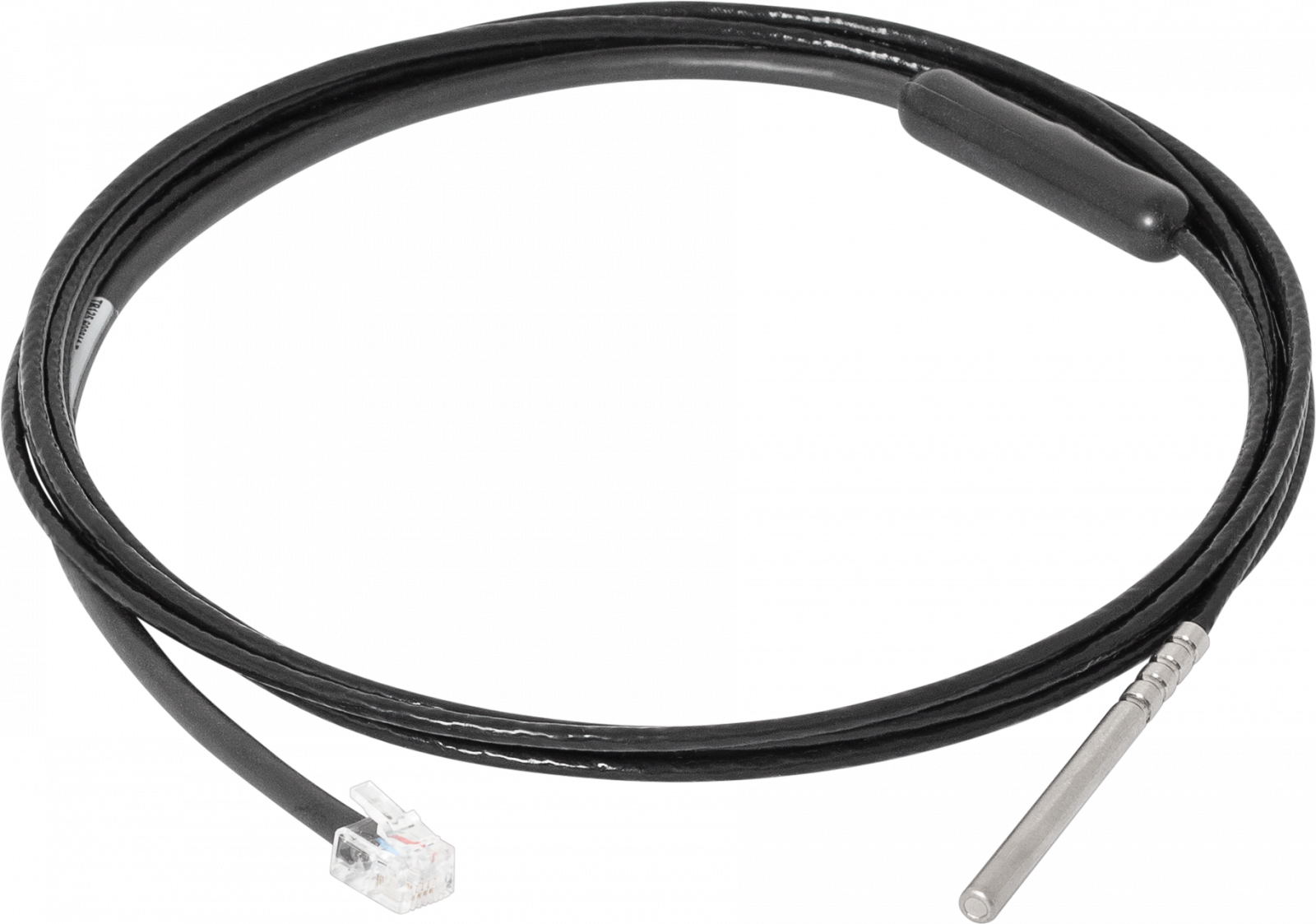
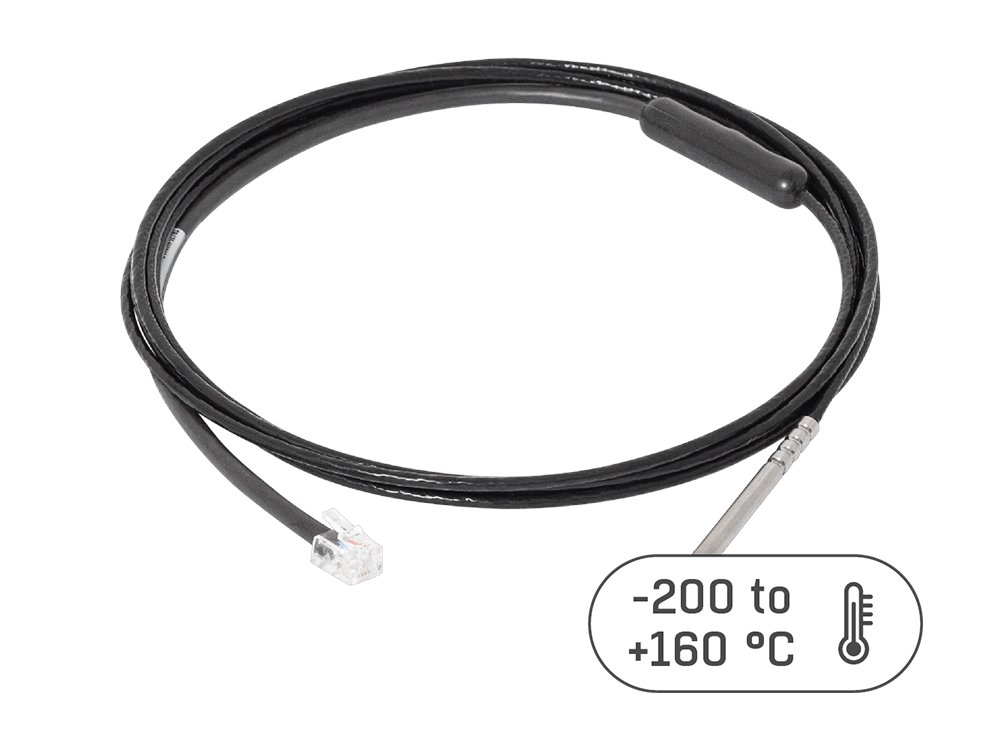
- Temperatures sensor for cryo application (-200 °C to +160 °C)
- High precision probe Pt100 with converted on the cable
- Compatible with all HW group products
- RJ11 - 3m cable, IP67 protection of the probe
- Powered from RJ11 port
- Calibration available
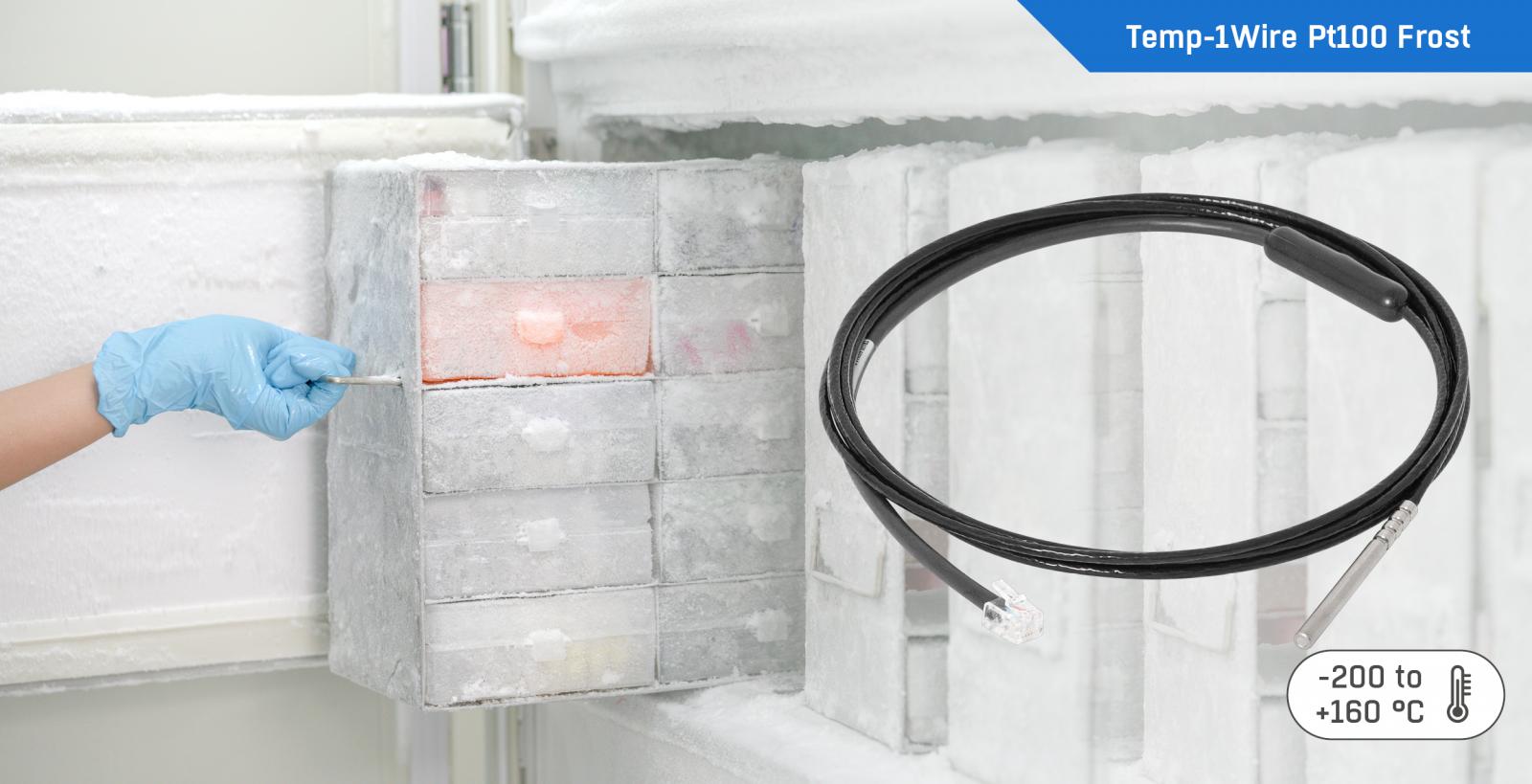
Temperature sensor specially designed for extremely cold (cryo) temperatures from -200 °C to +160 °C.
Temp-1Wire Pt100 frost offers high accuracy over a wide temperature range, long life, and IP67 protection.
If you need reliable temperature sensor for industrial cryo applications, the Temp-1Wire Pt100 Frost is the right choice.
Temperature sensor based on high precision Pt100 probe offers high accuracy over a wide temperature range, IP67 protection and 8-point calibration.
The sensor is powered from the RJ11 port, connect it directly to the 1Wire sensor port of HWg device.
The sensor is supported by all HW group devices with RJ11 port (1Wire or 1Wire UNI). Calibration is possible in 8 points using the HW group Calibrator.
The Temp-1Wire Pt100 Frost is an ideal temperature sensor for storages, food processing, freezers, medical and laboratory environments, agriculture and many other industrial applications.
The HW group monitoring system can be used for regular audits of measured values as well as for monitoring critical temperatures and alarming.
Applications and usage:
- Cryo temperature monitoring in deep freezers / gas industry
- Outdoor temperature monitoring
- Remote monitoring of pharmaceutical -80°C freezers
- Temperature monitoring in fridges and freezers (perfect solution for storing temperature-sensitive drugs)
- Measuring of temperature in agriculture
| Technical parameters | |
|---|---|
| Temperature range | -200 °C to +160 °C |
| Accuracy | ± (0,25 + 0,002|t|) |
| Resolution | 0.10 °C |
| Protection | IP67 |
| Cable length | 3 m |
| Calibration | Yes, in 8 points |
 Klienci, którzy już przeglądali ten artykuł, zobaczyli również